How Multi-City Bookings Adapt Accompaniment to a Businessman’s Complex European Route

A multi-city booking is designed for business travellers whose calendar moves faster than a standard hotel check-in. One day may begin with a board meeting in Frankfurt, continue with a client dinner in Paris, and end with an early flight to Milan. In this format, accompaniment is planned around the entire European itinerary rather than arranged separately in every destination.
Multi-City Bookings for Business Travel Across Europe
The main advantage of multi-city bookings is continuity. Instead of repeating preferences, schedules and expectations for each location, a businessman can organise accompaniment as one coordinated route. This is especially useful when the trip includes several airports, conferences, private events and changing hotel reservations.
European business travel often involves short distances on the map but tight logistics in reality. A morning train from Brussels to Paris, a late flight to Berlin or an evening arrival in Vienna can leave little room for last-minute planning. A Europe Catalog helps travellers understand which destinations can fit naturally into a wider route, from major financial hubs to discreet resort locations.

How Businessman Accompaniment Follows a Complex Itinerary
Well-organised businessman accompaniment begins with the travel plan: dates, cities, transport windows, hotel areas and the purpose of each stop. The itinerary does not need to be rigid, but it should show where flexibility may be required. Delayed flights, extended negotiations and invitation-only dinners are common in European corporate travel.
For example, a route from Amsterdam to Munich and then to Rome may require different timing than a trip through London, Zurich and Monaco. The companion’s availability is matched to the pace of the journey, whether the client needs a polished presence at a restaurant, company during downtime, or support navigating an unfamiliar city after a long day.
European Multi-City Booking: Planning Details That Matter
A successful multi-city booking is not simply a collection of separate dates. It is a single plan with clear transitions between destinations. The most important details are arrival and departure times, accommodation proximity, local transport options and realistic breaks between obligations.
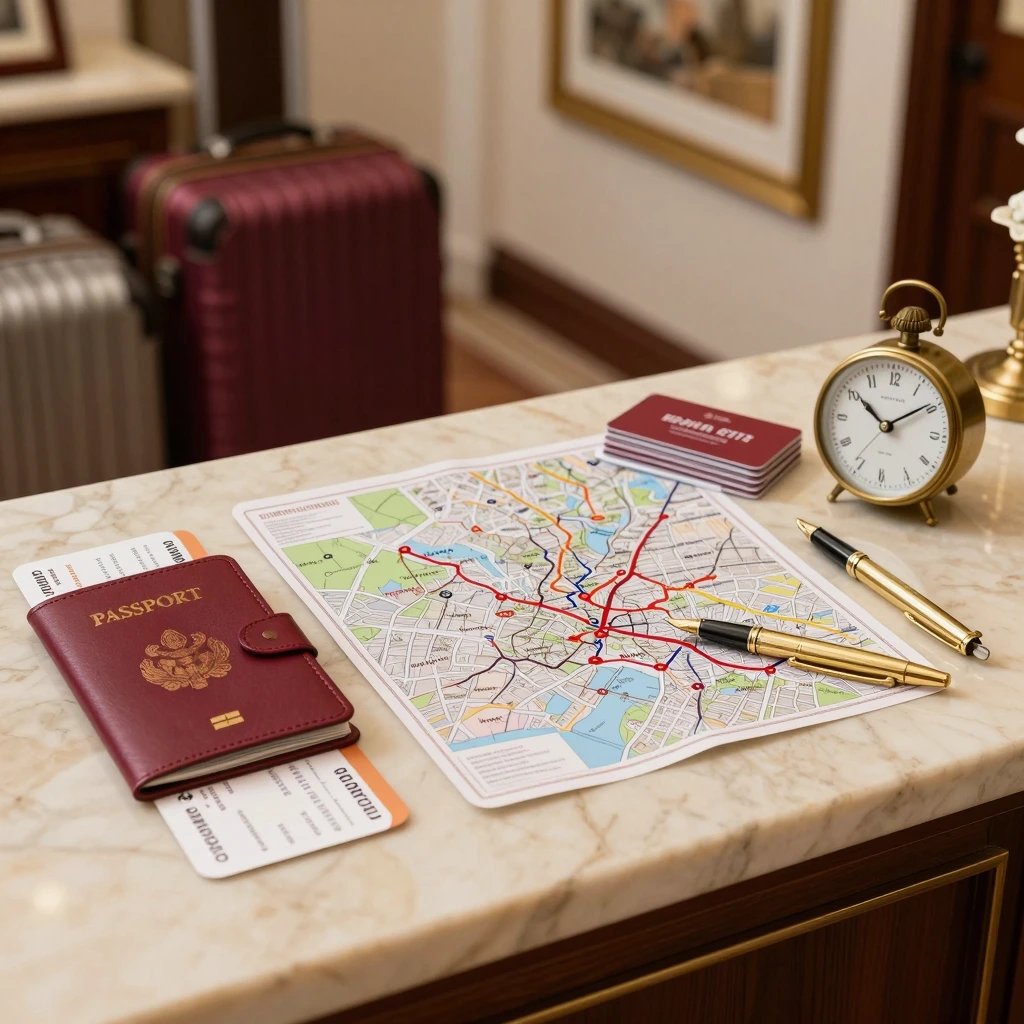
Schedules, Privacy and Local Rhythm
Europe is diverse even on a compact route. A business lunch in France may run longer than expected, while a trade fair schedule in Germany can be highly structured from the first morning. In Italy, an evening meeting may naturally shift into dinner; in the Netherlands, train connections can make same-day city changes practical.
Privacy should be considered from the first conversation. Experienced travellers usually share only the information necessary for coordination: city sequence, preferred contact method, approximate schedule and any formal event requirements. A reliable plan leaves room for discretion without creating confusion at airports, hotels or venues.
Choosing the Right Cities for Accompaniment in Europe
Multi-city bookings work particularly well for routes built around commercial centres. Paris, Milan, Frankfurt, Vienna, Barcelona and Brussels are frequent choices, but smaller destinations can also be part of a productive schedule. A client visiting tech firms in Tallinn, attending a conference in Prague, then meeting partners in Warsaw may need the same level of planning as someone travelling between capitals.

Country-specific preparation makes a difference. Before adding a stop in the Alps, consult options for Austria; for Mediterranean meetings and yacht-season events, explore local availability in Italy. The goal is not to force every city into one pattern, but to shape the booking around the traveller’s actual route.
Why Multi-City Bookings Save Time for Businessmen
The real value is efficiency. One coordinated request reduces repetitive messaging, helps avoid gaps between destinations and makes changes easier to manage. If a meeting in Brussels is moved to the next day or a Milan flight is cancelled, the overall plan can be adjusted without rebuilding every arrangement from zero.
For businessmen who travel across Europe regularly, multi-city bookings turn accompaniment into a practical part of itinerary management: composed, flexible and aligned with the rhythm of international work.